 Richard W. Baker
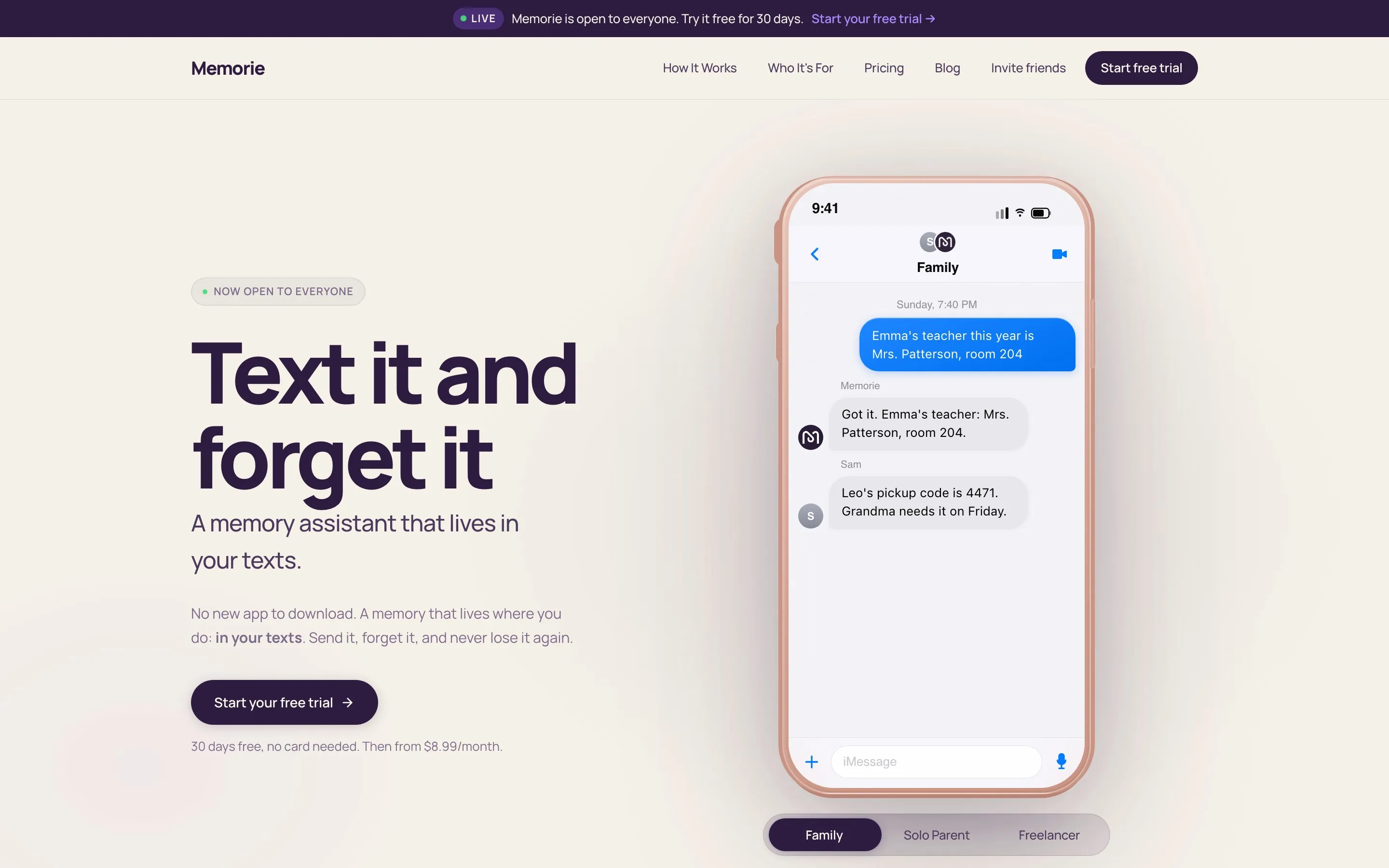
Memorie is a memory assistant that lives in your texts. You text it a detail you want to keep, like a teacher’s name or a shoe size, and ask for it later in plain words. It also texts you first: a permission slip due Friday, or a birthday two days out.
There is no app to download. I started Memorie with two other product and design leaders, and it has been open to everyone since October 1, 2026.
It is also an experiment in how much of a product, and the business around it, AI can do. AI agents wrote the code. We art-directed the marketing and AI made it, and it posts and follows up with people on its own.
Context and challenge
The people Memorie is for have already tried the apps. Busy parents, caregivers, and people with ADHD tend to have a notes app, a to-do app, and a reminders app, and they still text themselves.
Each of those apps asks for a decision at the moment of capture: which app, which folder, which list. By then the moment is gone. A text asks for nothing, so that is where Memorie lives.
The challenge was to make saving something cost nothing, and getting it back as easy as asking a friend.
Choosing who it’s for
The first version was for anyone with too much on their mind. That is nearly everyone, which made it hard to say who Memorie was for.
In August we looked closely at the products nearest to us. Some promise to run the whole household, with calendars, meal plans, and a screen on the kitchen wall. We chose one audience to lead with instead: busy parents, and most often the parent everyone asks. We kept the promise small. Memorie doesn’t manage the household. It catches the detail when it arrives and gives it back when someone asks.
Designing around a text
Three rules shaped the product.
Saving takes one text. Memorie asks nothing at the moment of capture. Messy input is welcome: a lowercase note typed at a red light is enough.
Getting it back is a question. You ask the way you’d ask a person, “what’s Leo’s shoe size?”, and the answer comes back as a text.
The AI stays backstage. Memorie never sells itself as an AI assistant. It shows real messages and parent moments, because people want the detail back, not a new kind of software.
Bringing in the family
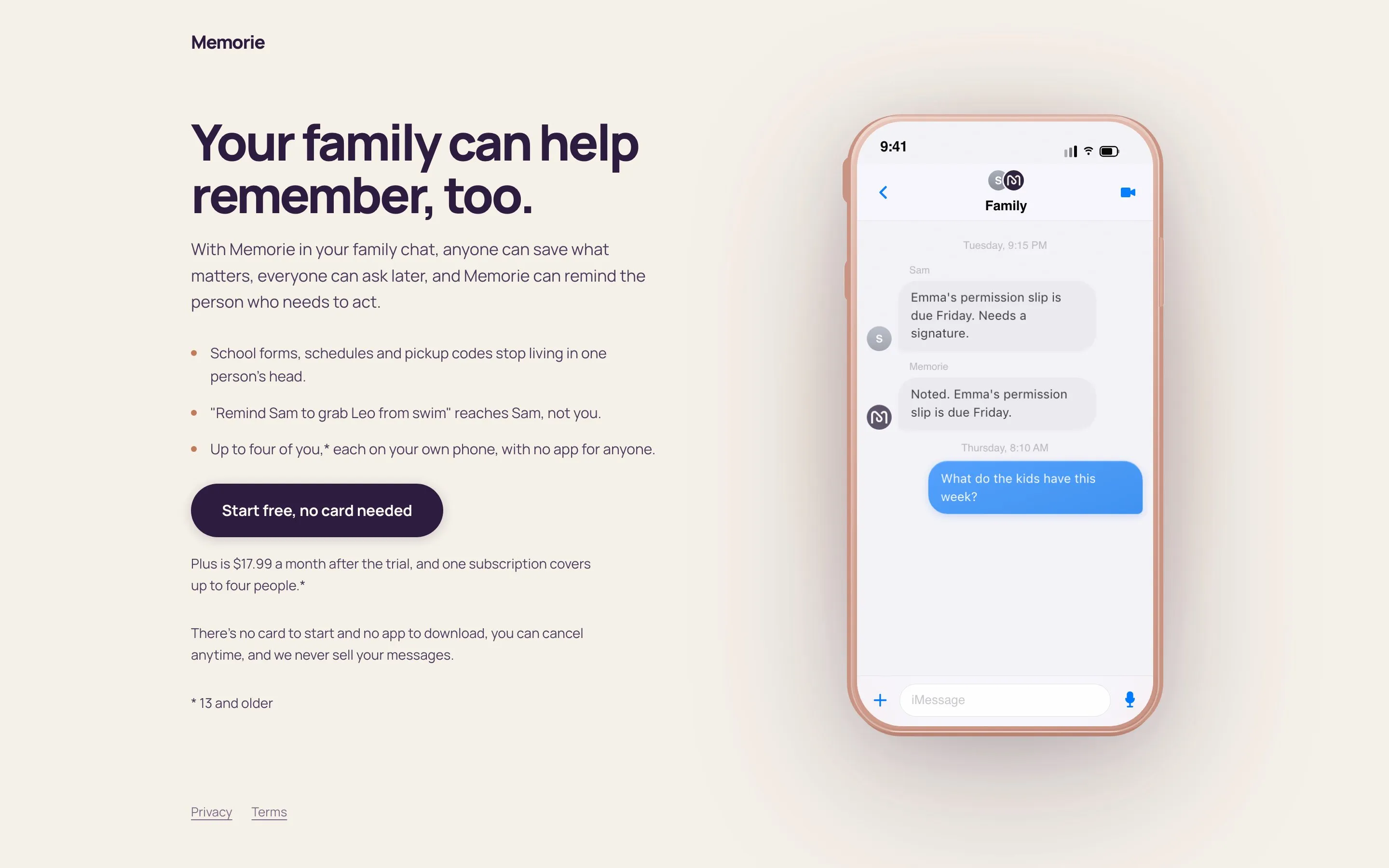
Choosing parents changed the product. Memorie joined the family group chat.
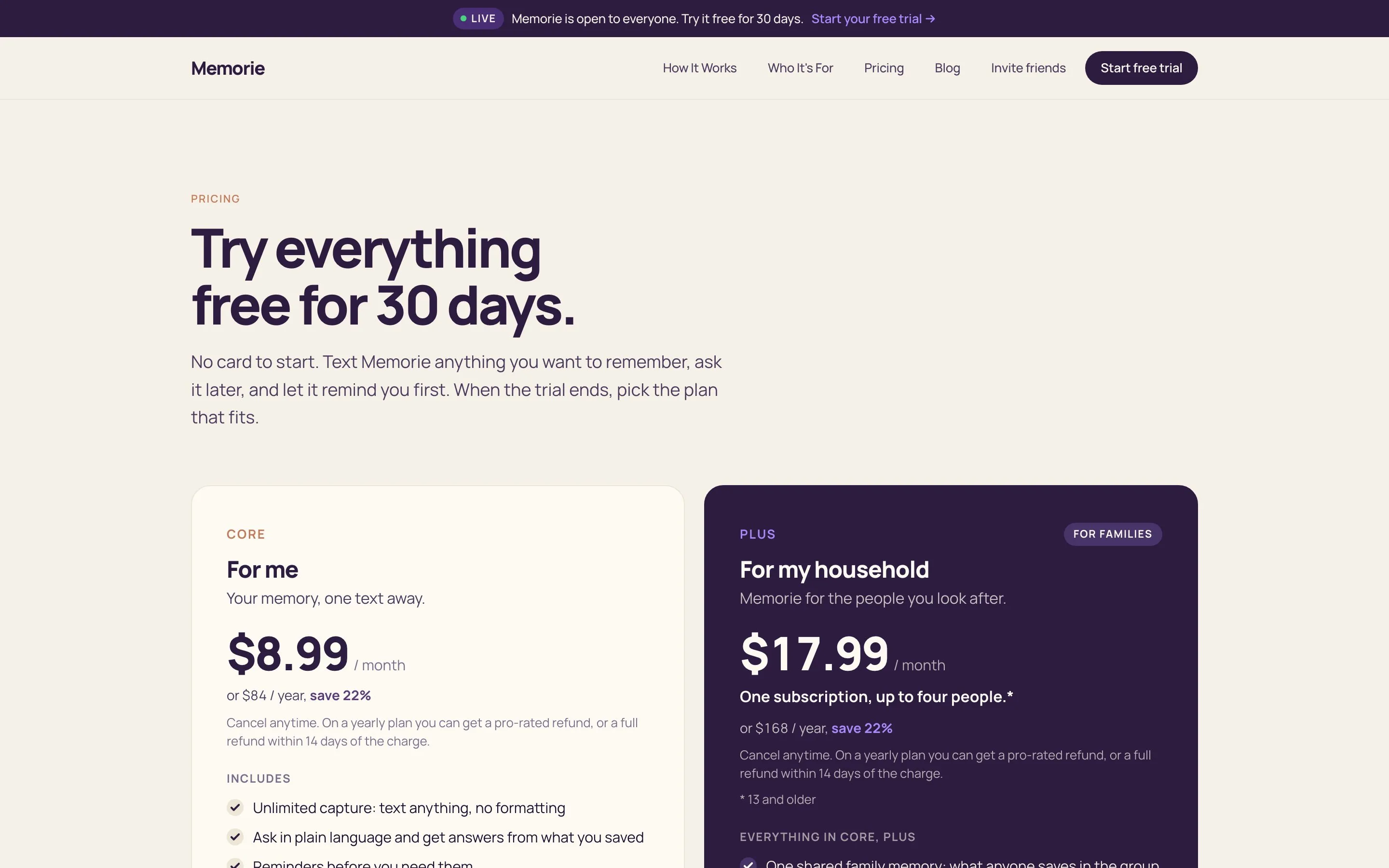
Anyone in the chat can save a detail and everyone can ask about it. “Remind Sam to grab Leo from swim” reaches Sam, not the person who typed it. Each person stays on their own phone, so there is still no app for anyone to learn. Family sharing became the Plus plan, for up to four people.
The website and signup
The home page shows a conversation instead of describing one. A phone plays a family chat, a solo parent’s, or a freelancer’s, and every button leads to the same signup page. The design keeps the technology out of sight: warm cream and deep plum, real messages, and no robot imagery, gradients, or dashboards.
Signup takes a phone number and an email, then hands the new account to the engine. Members can invite friends with a link, or by texting “invite,” and earn free days when a friend joins. Around it all sit 27 blog posts on the problems Memorie solves, such as the mental load parents carry.
Marketing made with AI
We set the direction for every piece: who it’s for, the one moment it shows, the words, and the look. AI made the pieces. Photos were generated, phone scenes were built as web pages and rendered to video, and the music and message sounds were timed to land on the beat. We reviewed every cut.
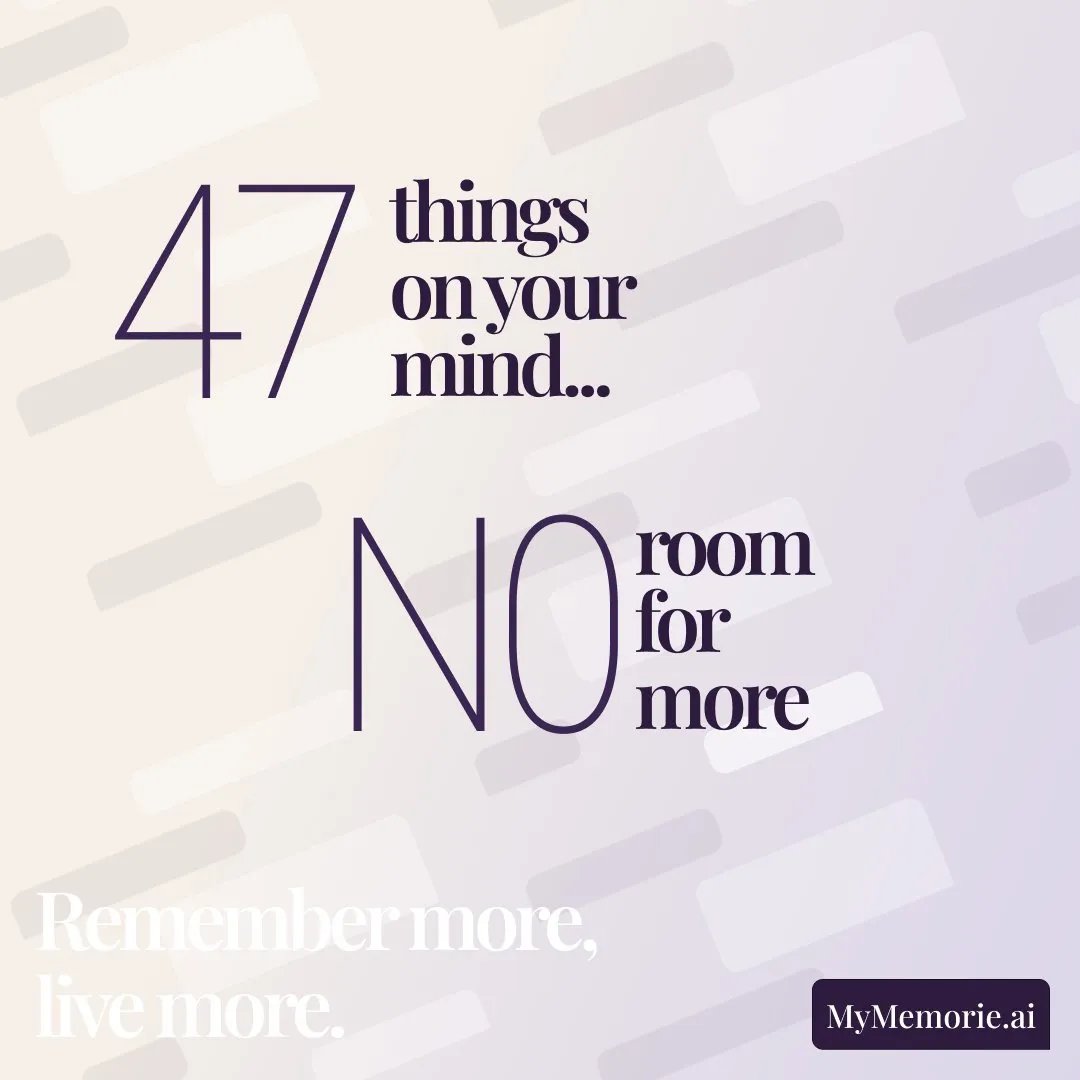
The spring launch on LinkedIn and Instagram spoke to anyone with too much on their mind, in a serif headline over plum or a photo, twice a week for ten weeks.
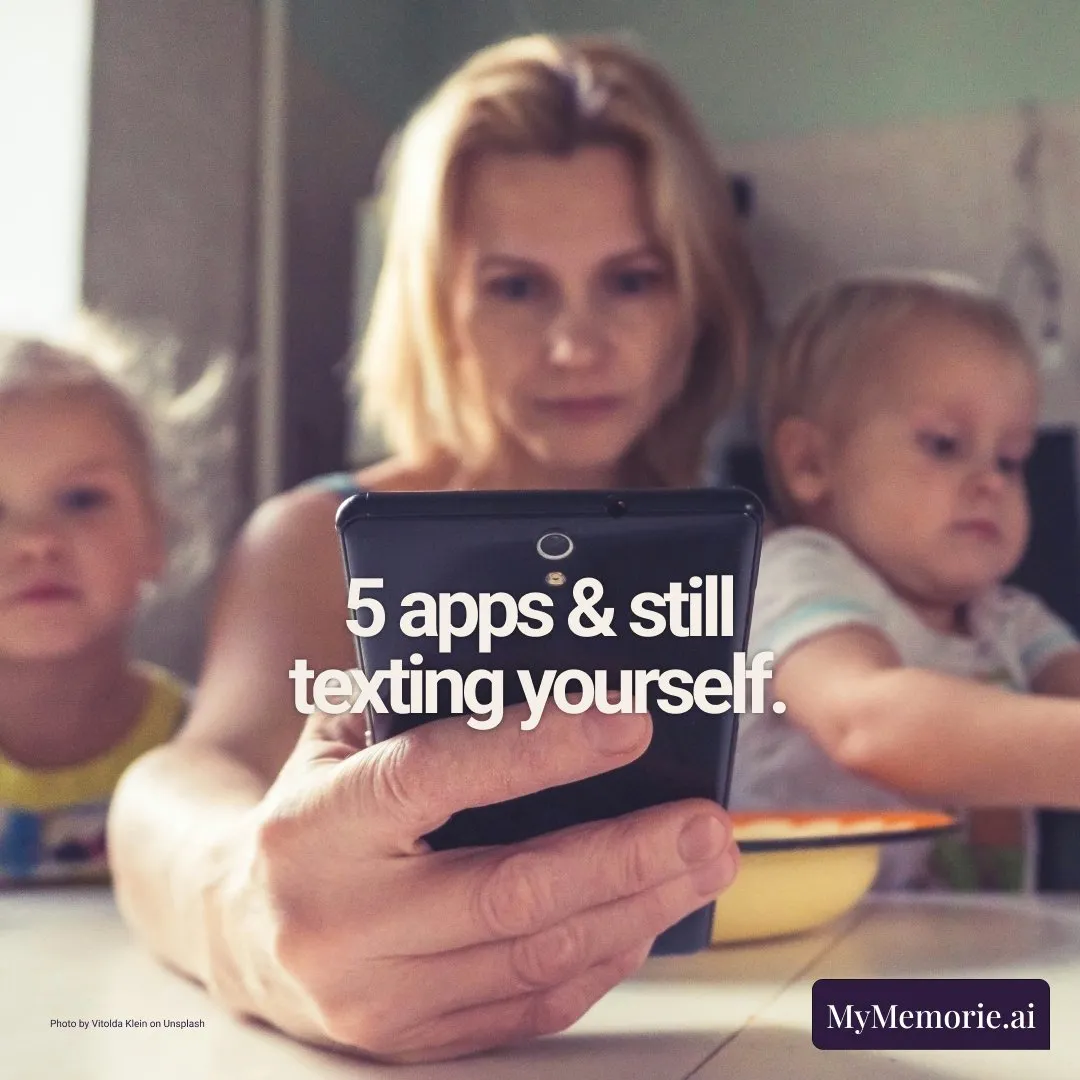
Once the audience was parents, the ads became short videos of Memorie at work in a family chat. Because a new cut cost little to make, each round could test one change: a faster opening, starting on the chat, or holding the offer back.
Four of the fall ads, from the October 30 launch to November 19.
What happens after an ad runs on its own too. Every ad gets a tracked link, so one admin page shows the signups, trials, and paid members each campaign brought in. New members get a series of emails and texts that welcome them, help them send a first text, and remind them before the trial ends. Anyone who stops partway through signup gets a link to finish.
How we built it
Memorie has two parts. The engine keeps what each person has told it, sets reminders, and replies over SMS and iMessage. The website handles everything around it: the pages, signup, invites, and the tools that show which ads work.
AI coding agents wrote the code for both. The larger features began as a written design and a plan, and we reviewed the code and tested it against the live signup.
The idea started in January 2026 as Just Text It, became HeyZen, and was renamed Memorie in April.
Reflections and learnings
Narrowing to one audience did more than any single feature. It gave the product the family chat, and it gave the ads a person to talk to.
AI made the work cheap to produce, so trying things got cheap too. We could test one change at a time instead of guessing. It also showed where the hard part is. The ads and the signup page do their job; the harder step is the one after, getting a new member to send that first text. Faster production doesn’t solve that, and it is where our attention is now.